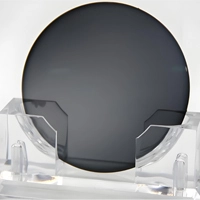
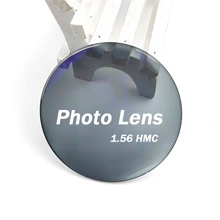
Photochromic lenses can be made by incorporating light-responsive compounds into the lens material or by forming a functional layer on the surface. Both routes can deliver indoor-to-outdoor convenience, but they differ in substrate flexibility, color consistency, process control, and purchasing risk. For optical wholesalers and laboratories, the right choice requires more than comparing how dark one sample looks under a lamp.
A photochromic lens is an ophthalmic lens containing reversible light-responsive compounds that darken under suitable radiation and return toward a clearer state after that activation is removed.
How In-Mass and Spin-Coated Photochromic Lenses Are Made
In-mass production introduces the photochromic compound into the monomer before polymerization, so the active material becomes part of the lens body. Patent literature distinguishes this from coating methods, in which a photochromic layer is formed on an already prepared substrate.
Spin coating starts with a clear lens or blank. A measured liquid formulation is dispensed onto the surface while controlled rotation spreads it into a uniform layer. The layer is cured, then combined with compatible protective treatments. Spin-coating patents emphasize uniform film formation and control of defects such as trapped bubbles.
A simplified production sequence is:
Clean and inspect the lens substrate.
Introduce photochromic chemistry through polymerization or a cured surface layer.
Add compatible hard, anti-reflective or hydrophobic treatments and complete inspection.
| Comparison point | In-mass lens | Spin-coated lens |
| Active material | Distributed through the polymer body | Concentrated in a cured surface layer |
| Main requirement | Compatible monomer and polymerization system | Controlled surface preparation and adhesion |
| Thickness effect | Lens geometry may influence visible results | Surface coverage can remain more uniform across powers |
| Production focus | Formulation, casting, and curing | Film thickness, curing, and coating compatibility |
| Buyer concern | Background tint and batch consistency | Durability, edging, and layer adhesion |
Neither method is automatically better. In-mass technology suits stable, high-volume molded products, while spin coating gives manufacturers more flexibility across different substrates and prescription designs.
Gray vs Brown Photochromic Lenses
Gray and brown are common because both create a practical outdoor tint while returning to a relatively clear indoor state. Gray is usually selected when neutral color perception is important. Brown creates a warmer appearance and is often chosen for contrast-oriented or fashion-led collections.
Lens color alone does not establish UV protection. The American Academy of Ophthalmology notes that colored lenses do not necessarily block more sunlight simply because of their tint, so UV and transmittance performance must be verified separately.
Choose the color according to the program:
Use gray for broad everyday ranges and a neutral outdoor appearance.
Use brown for warmer frame palettes or contrast-focused positioning.
Approve both colors under identical activation conditions before comparing darkness or fading.
Buyers should inspect lenses in pairs and check residual indoor color, edge appearance, coating reflection, and consistency across prescription powers.
How to Select the Right Lens Index
Index selection affects thickness, weight, impact behavior, optical design, and process compatibility. It also influences which photochromic route is practical.
For mainstream prescriptions, 1.56 photochromic lenses can support single-vision, bifocal, or progressive programs. Buyers should still confirm whether the quoted product is in-mass or surface-coated because the same index may be supplied through different processes.
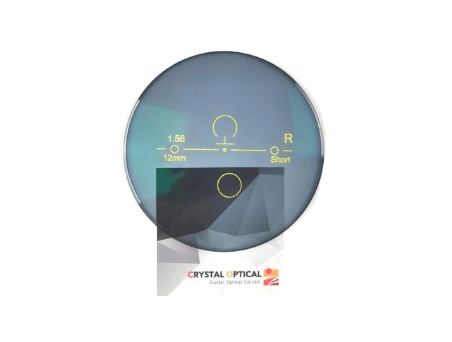
For impact-conscious collections, evaluate the substrate separately. Reviewing 1.59 polycarbonate lenses helps buyers assess the base material before specifying a spin-photochromic version. Coating adhesion, curing, and edging conditions should be confirmed for polycarbonate rather than copied from standard resin lenses.
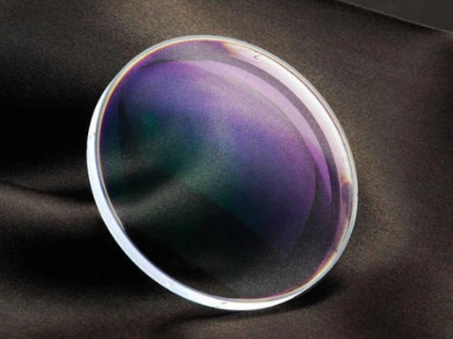
Higher-index programs can reduce lens profile for stronger prescriptions, but the specification should also state base curve, power range, lens design, photochromic method, and coating package. A higher index does not by itself guarantee faster activation or greater darkness.
A combined-function product, such as a blue cut photochromic lens, should separate its blue-filtering claim from its photochromic response. The two functions need independent test evidence.
Performance Testing and Supplier Selection
Photochromic behavior changes with test conditions. A peer-reviewed study evaluated 12 commercial lenses from five manufacturers at 6 ± 2°C and 21 ± 2°C. In the colder condition, transmittance was 11.5% lower and the change in optical density was 1.4 times higher. Samples tested at different temperatures are therefore not directly comparable.
ISO 8980-3:2022 specifies transmittance requirements and test methods for finished spectacle lenses, including attenuation of solar radiation. This provides a stronger basis for purchasing documentation than unsupported descriptions such as “fast change” or “extra dark.”
When assessing photochromic lens manufacturers, request:
Clear-state and activated-state transmittance results under defined light, time, and temperature conditions.
Activation, fading, and cycle-consistency data for the actual substrate and coating combination.
Production-equivalent samples covering representative powers and both gray and brown.
Acceptance criteria for haze, residual tint, pair mismatch, coating defects, and batch variation.
The approval record should identify the index, design, material, manufacturing method, color, and coating. Otherwise, an accepted sample may not represent the production order.
Conclusion
In-mass and spin-coated photochromic lenses use different manufacturing routes, each with valid applications. In-mass products depend on compatible casting chemistry, while spin-coated products rely on controlled film formation and adhesion. Gray and brown should be selected by visual intent, not assumed UV performance. Final approval should combine lens index, prescription design, coating package, and standardized test evidence.
FAQ
What is the main difference between in-mass and spin-coated lenses?
In-mass lenses contain the active compound within the polymer body. Spin-coated lenses carry it in a cured surface layer.
Are spin-coated lenses always faster?
No. Response speed also depends on chemistry, temperature, activation source, and test method.
Does gray provide more UV protection than brown?
Not necessarily. UV performance must be measured independently of visible tint color.
Which lens index is best?
The choice depends on prescription, thickness, impact requirements, lens design, and coating compatibility.
Why are photochromic lenses darker in cold weather?
Temperature affects the balance between activated and clear molecular states, changing darkness and fading behavior.
What should buyers compare before approval?
Compare method, index, material, clear and dark transmittance, activation conditions, residual color, pair matching, adhesion, and cycle consistency.

 English
  日本語
日本語  한국어
한국어  français
  Deutsch
  Español
  italiano
  русский
  português
  日本語
日本語