Vision needs change with age, lifestyle and daily activities. For people who require correction for distance, intermediate and near vision, progressive lenses provide a seamless alternative to traditional multifocal designs. However, not all progressive lenses are designed in the same way. Understanding the types of progressive lenses helps optical professionals and users better evaluate how different designs influence visual zones, adaptation and wearing experience.
Unlike bifocal lenses with a visible line separating distance and near areas, progressive lenses create a continuous transition between multiple optical powers. The design of this transition, the size of each viewing zone and the way the lens is optimized for the wearer all influence the final visual performance. Therefore, choosing among different types of progressive lenses is not only about prescription strength, but also about lifestyle requirements, frame selection and lens technology.
What Are Progressive Lenses and How Do Their Zones Work?
Progressive lenses are multifocal lenses designed to provide distance, intermediate and near vision correction within a single lens surface. The main difference from traditional bifocal lenses is that progressive lenses do not have a visible dividing line between optical zones.
A typical progressive lens contains several functional areas. The upper part is designed for distance vision, the central corridor provides intermediate vision for tasks such as computer use, and the lower section supports near vision for reading or close work.
The transition area between these zones is known as the progression corridor. Its length, width and optical design influence how easily the wearer can move between different visual distances. A well-designed progressive lens balances clear vision, comfort and natural eye movement.
Different Types of Progressive Lenses by Design
When discussing the different types of progressive lenses, the main differences usually come from design purpose rather than basic lens function. Different users may require different progressive structures depending on their frame style, work environment and visual habits.
Common progressive designs include:
Standard progressive lenses: Designed for general everyday use, offering balanced distance, intermediate and near vision areas.
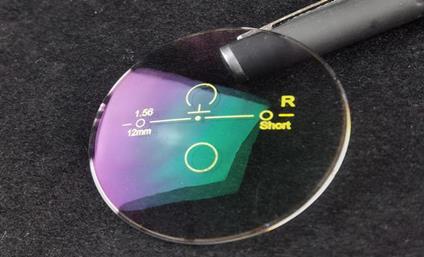
Short-corridor progressive lenses: Developed for smaller frames where vertical space is limited. The design adjusts the transition area to fit compact eyewear.
Office or occupational progressive lenses: Optimized for intermediate and near distances, making them suitable for users who spend extended time working at desks or computers.
Freeform progressive lenses: Created with digital optimization methods to improve personalization based on prescription parameters and wearing conditions.
These categories show why there is no single progressive lens design suitable for every situation. The right choice depends on how the lens will be used.
Standard vs Freeform Progressive Lens Designs
One of the most important distinctions among the types of progressive lenses is the difference between standard designs and freeform progressive designs.
Standard progressive lenses use established optical calculations to create multiple vision zones. They can provide reliable performance for many everyday applications and remain a practical option for general prescriptions.
Freeform progressive lenses use advanced digital surfacing technology to optimize the lens design according to more individual parameters. Factors such as prescription details, frame measurements, pupil distance and visual requirements can be considered during the design process.
The goal of freeform technology is not simply to add more complexity, but to improve how the wearer experiences different viewing distances. By controlling the distribution of optical power more precisely, freeform designs can provide a more personalized visual solution.
Crystal Optical offers freeform progressive lens solutions with different material options, indexes and customization possibilities, allowing optical businesses to develop products for various prescription and wearing requirements.
How Progressive Design Changes the Viewing Experience
The performance of a progressive lens depends heavily on how optical zones are arranged. Two lenses with the same prescription can feel different if their corridor design, peripheral control and near-zone positioning are different.
Important design factors include corridor length, intermediate viewing area and peripheral distortion management. A longer corridor may provide smoother transitions between distances, while a shorter corridor can better fit smaller frames.
Adaptation is another important consideration. When a wearer moves their eyes through different areas of a progressive lens, the brain must adjust to the changing optical power. A suitable design can make this adjustment easier by providing a natural balance between different viewing zones.
For this reason, progressive lens selection should consider both prescription requirements and daily activities. A lens designed for office work may prioritize intermediate vision, while a lens for general outdoor and indoor use may require a broader distance area.
Progressive Lens Types for Different Daily Activities
Different lifestyles create different expectations for progressive lens performance. A user who frequently changes between outdoor activities, computer work and reading may need a different design from someone who mainly requires near and intermediate vision.
| Visual Requirement | Suitable Progressive Direction |
|---|
| General everyday vision correction | Standard progressive lens |
| Small frame requirements | Short-corridor progressive design |
| Long computer and desk work | Office or occupational progressive lens |
| Personalized prescription needs | Freeform progressive lens |
| Outdoor and changing light environments | Photochromic progressive lens |
Crystal Optical provides multiple progressive lens options, including 1.499 Progressive, 1.56 Progressive, 1.59 PC Progressive, photochromic progressive lenses and freeform progressive solutions. These options allow optical businesses to match lens design with different application scenarios.
How Material, Index and Frame Parameters Affect Progressive Design
Progressive lens performance is not determined by optical design alone. Material selection, lens index and frame parameters also influence the final wearing experience.
Several factors work together to shape the final progressive lens performance:
Lens material and index: Higher-index materials can help reduce lens thickness for stronger prescriptions, while materials such as polycarbonate may provide improved impact resistance for specific applications.
Frame and fitting parameters: Frame size, fitting height and pupil distance influence how the wearer accesses different vision zones and how effectively the progressive design works.
Optical customization requirements: Prescription power, wearing habits and visual tasks can affect how the progressive surface should be optimized.
For example, Crystal Optical freeform progressive products are available in multiple index options, including 1.49, 1.53, 1.56, 1.59, 1.60, 1.67 and 1.74, with diameter options ranging from 50 mm to 80 mm. These specifications provide flexibility for different prescription ranges and lens designs.
The relationship between lens material, optical calculation and frame parameters shows why progressive lenses require careful design rather than a one-size-fits-all approach.
Conclusion: The Best Progressive Lens Is Design-Specific
The best choice among the types of progressive lenses depends on more than prescription values. Progressive performance is shaped by corridor design, optical zones, lens materials, frame parameters and the user’s daily visual requirements.
Understanding the different types of progressive lenses allows optical professionals to select solutions that better match real-world needs. Crystal Optical combines multiple progressive materials, freeform customization and functional options such as photochromic technology to support different prescription and application requirements.
FAQ
Are all progressive lenses made with the same corridor design?
No. Progressive lenses can use different corridor lengths and optical zone arrangements depending on the intended application, frame size and design philosophy.
Can progressive lenses be made for small frames?
Yes. Short-corridor progressive designs are specifically developed for smaller frames by adjusting the vertical distribution of vision zones.
What makes a freeform progressive different from a standard design?
A freeform progressive lens uses digital optimization methods to customize the optical surface based on more detailed wearer parameters, while standard designs use more general calculations.
Can progressive lenses be combined with photochromic technology?
Yes. Photochromic technology can be integrated into progressive lens designs, allowing the lens to adjust tint according to changing light conditions.
Do higher-index materials change the feel of progressive lenses?
Higher-index materials can influence lens thickness, weight and optical characteristics. The final wearing experience also depends on lens design and frame fitting.
How can frame parameters affect a progressive lens design?
Frame size, fitting height, pupil distance and lens positioning affect how the wearer accesses distance, intermediate and near vision areas, so accurate measurements are important for progressive lens performance.

 English
  日本語
日本語  한국어
한국어  français
  Deutsch
  Español
  italiano
  русский
  português
  日本語
日本語