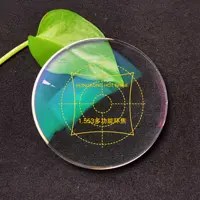
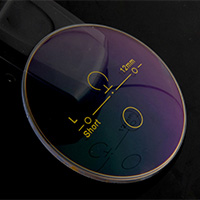
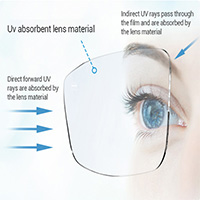
UC, HC, HMC and SHMC describe different levels of surface treatment rather than different lens materials. UC is uncoated, HC adds a protective hard coat, HMC combines hard coating with multilayer anti-reflective treatment, and SHMC normally adds a hydrophobic or oleophobic top layer. The right option depends on the substrate, target market, cleaning expectations and quality-control evidence.
An eyeglass lens coating is a functional surface treatment applied to a spectacle lens to improve durability, reflection control, cleanliness or a combination of these properties.
What Do UC, HC, HMC and SHMC Mean?
These abbreviations are common trade labels, not complete technical specifications. Because international standards assess coating properties and test methods rather than defining every commercial abbreviation, one supplier’s HMC package may differ from another supplier’s layer structure, residual color or topcoat. Buyers should confirm the actual coating construction and acceptance criteria.
UC means uncoated. The lens receives no added hard coat or anti-reflective stack. It can suit price-sensitive orders, tinting workflows or laboratories that plan additional processing. Its main limitation is lower resistance to handling marks and abrasion.
HC means hard coated. A cured protective layer improves surface durability. “Hard coated” does not mean scratch-proof; abrasive dust, rough storage and poor cleaning can still damage the lens. Abrasion-resistance claims should therefore be supported by a defined test method rather than a coating name alone.
HMC usually means hard multi-coated. It combines a hard coat with multiple thin-film layers that reduce surface reflections. Anti-reflective coatings use thin-film interference, allowing reflected light from different interfaces to cancel part of the unwanted reflection.
SHMC commonly means super hydrophobic multi-coated. It normally adds a low-surface-energy top layer over the anti-reflective stack, helping water, fingerprints and oily contamination release more easily. The current international standard for spectacle-lens coatings includes test methods for both anti-reflective and hydrophobic properties.
| Coating type | Typical structure | Main benefit | Main limitation | Common use |
| UC | Lens substrate only | Lowest processing complexity | Limited protection and reflection control | Budget orders, tinting or later processing |
| HC | Substrate plus hard coat | Better routine durability | No full anti-reflective performance | Entry-level prescription lenses |
| HMC | Hard coat plus multilayer AR stack | Lower reflections and clearer appearance | Performance depends on design and adhesion | Mainstream optical retail |
| SHMC | HMC plus hydrophobic or oleophobic topcoat | Easier cleaning and less water or oil adhesion | Topcoat performance requires verification | Premium and high-index lenses |
Why Multilayer and Hydrophobic Topcoats Matter
More layers are not automatically better. The coating system must remain compatible with the substrate, and each layer must bond correctly to the surface beneath it.
A practical coating stack should:
control distracting reflections without unacceptable haze or visible defects;
protect the plastic surface during routine handling and cleaning;
make water, skin oil and dust easier to remove.
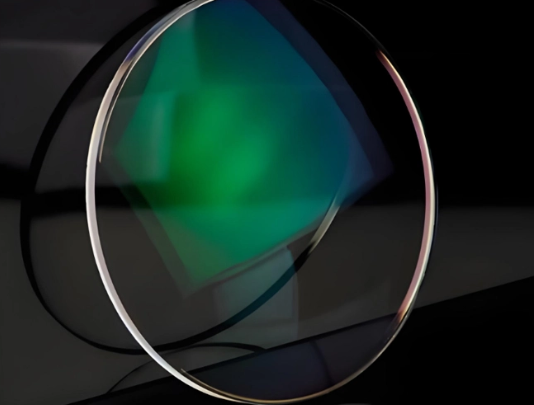
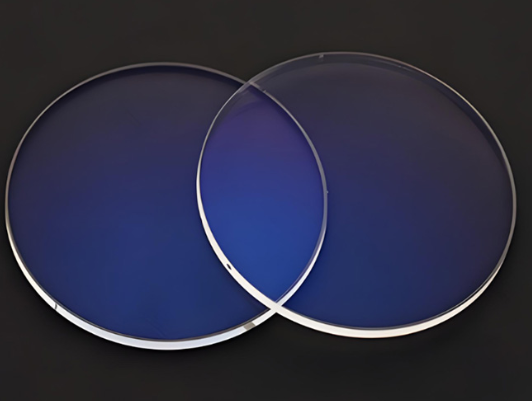
Residual reflected color—often green or blue—is a design result, not a quality grade by itself. Two lenses can show a similar color while differing in reflection control, durability and coating uniformity. Buyers comparing anti reflective lenses should therefore review measurable properties rather than choose only by appearance.
A hydrophobic topcoat does not make a lens permanently waterproof or fingerprint-proof. It changes how liquids and contamination interact with the surface, improving cleanability. Its performance may decline when users repeatedly apply unsuitable chemicals or abrasive cloths. Hydrophobic claims should therefore be tied to a defined test procedure and an approved production sample.
How to Match Coating to Lens Material and Market
The substrate, optical design and intended sales channel all influence the coating choice. Standard plastic lenses may be supplied as UC, HC, HMC or SHMC. For high-index product lines, anti-reflective treatment is normally considered as part of the overall specification rather than as an unrelated optional feature.
For general optical retail, 1.56 hmc lenses offer a practical combination of a widely used lens material and reflection control. Where stronger cleanability and a more premium finish are required, buyers may move from HMC to SHMC.
A hard multi coated lens can suit high-index or aspheric designs when the coating process is matched to the material. Adhesion, curing and thermal behavior should be controlled for the selected substrate rather than copied directly from another lens family.
For premium collections, super hydrophobic lenses may support an easier-cleaning product proposition. The specification should still separate the lens index, optical design, anti-reflective performance, topcoat properties and any blue-filtering function. Combining every feature under one marketing name makes meaningful supplier comparison difficult.
Selection priorities usually differ by channel:
value programs emphasize stable HC quality, tintability and cost control;
mainstream optical stores generally need consistent HMC color, adhesion and cosmetic quality;
premium or high-index programs benefit from verified SHMC cleanability;
RX laboratories should confirm compatibility with edging, mounting and later processing.
How Optical Buyers Should Evaluate Coating Quality
ISO 8980-4:2026, published in June 2026, covers optical and non-optical requirements and test methods for anti-reflective and hydrophobic coating properties on spectacle lenses. It does not use coating color alone as the basis for quality evaluation.
Abrasion-resistance claims are addressed by ISO 8980-5:2005. The standard requires a lens claimed to be abrasion-resistant to meet the applicable requirements on both its front and back surfaces.
ISO/TR 21958:2019 also reviews commonly used scratch- and abrasion-resistance test methods, including their technical capabilities and limitations. This matters because one favorable test result should not be treated as a complete guarantee of long-term coating durability.
Before approving production, buyers should request:
a coating code and layer description for each lens material;
test methods, acceptance limits and recent product-linked reports;
production-equivalent samples rather than display-only samples;
inspection criteria for haze, pinholes, stains, peeling and color variation;
cleaning and storage instructions for laboratories and retailers.
A useful approval process compares samples under consistent lighting, checks both surfaces and records batch information. The objective is not to find a coating that can never be damaged. It is to establish repeatable performance that matches the product claim, target price and intended use.
Conclusion
UC, HC, HMC and SHMC represent increasingly complex coating packages, but the abbreviation alone does not prove quality. Buyers should match the coating to the substrate and market, then verify reflection control, abrasion resistance, adhesion, cleanability and cosmetic consistency. A documented HMC or SHMC specification is more valuable than a premium-sounding label without test evidence.
FAQ
Is HMC the same as anti-reflective coating?
HMC normally includes an anti-reflective multilayer stack over a hard coat. However, the exact layer structure, residual color and topcoat can vary between suppliers.
Is SHMC always better than HMC?
Not always. SHMC adds easier-cleaning properties, while HC or HMC may better suit budget products, tinting programs or lenses that require additional laboratory processing.
Does hard coating make eyeglass lenses scratch-proof?
No. It improves resistance to routine abrasion, but dust, rough cloths, poor storage and harsh cleaning products can still cause surface damage.
What is the difference between hydrophobic and oleophobic coatings?
Hydrophobic surfaces reduce the spreading or adhesion of water. Oleophobic surfaces are designed to resist oils, grease and fingerprints. Some premium topcoats provide both properties.
Can coating color be used to judge lens quality?
No. Residual color is only one characteristic of the multilayer design. Buyers should also assess reflection performance, uniformity, adhesion, durability and cosmetic defects.
What should an eyeglass lens coating specification include?
It should identify the lens substrate, coating type, residual color, required test methods, acceptance limits, surface-inspection rules, packaging method and approved reference sample.

 English
  日本語
日本語  한국어
한국어  français
  Deutsch
  Español
  italiano
  русский
  português
  日本語
日本語