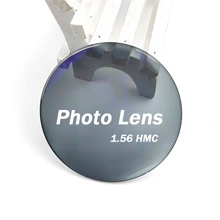
When choosing optical lenses for modern lifestyles, many people compare photochromic vs blue cut lenses because both technologies are often associated with changing light environments. However, they solve different optical challenges. Photochromic lenses are designed to respond to changes in light exposure, while blue cut lenses focus on filtering selected wavelengths of blue light.
Understanding the difference between photochromic and blue cut lens technology is important for optical professionals and buyers because these two solutions are not direct replacements for each other. One focuses on automatic light adaptation, while the other focuses on spectral filtering. In some cases, both technologies can even be combined in a single lens design to meet multiple visual needs.
What Are Photochromic and Blue Cut Lenses Designed to Do?
Photochromic and blue cut lenses are designed around different optical principles. Although both are related to light management, their working methods are different.
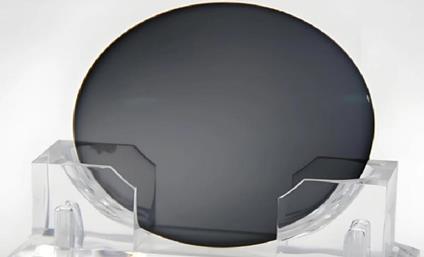
Photochromic lenses are developed to adjust their tint according to environmental light conditions. When exposed to suitable UV radiation or outdoor light intensity, the lens becomes darker. When the wearer returns indoors, the lens gradually becomes clearer again. This makes photochromic technology suitable for people who frequently move between indoor and outdoor environments.
Crystal Optical’s 1.56 Photochromic Lens products describe this technology as an automatic color-changing solution that adjusts according to UV intensity, remaining clear indoors and becoming darker outdoors.
Blue cut lenses, also known as blue block lenses, work differently. Instead of changing color based on light exposure, they are designed to filter selected blue-light wavelengths through lens material or coating technology. Crystal Optical’s blue block lens products include designs targeting specific blue-light ranges, such as approximately 400–455 nm depending on the product specification.
A simple way to understand the difference is:
Photochromic lenses = adapting to changing light conditions
Blue cut lenses = filtering selected light wavelengths
This distinction is the foundation for understanding the types of applications where each lens technology is most suitable.
What Is the Difference Between Photochromic and Blue Cut Lens Technology?
The difference between photochromic and blue cut lens technology mainly comes from their function, activation method and intended use. Although both manage light exposure, they achieve this through different approaches.
| Feature | Photochromic Lens | Blue Cut Lens |
|---|
| Main function | Changes tint according to light exposure | Filters selected blue-light wavelengths |
| Indoor appearance | Usually clear or nearly clear | Usually remains clear or slightly tinted depending on design |
| Outdoor response | Automatically darkens under suitable conditions | Does not automatically change tint |
| Main technology | Photochromic materials or coatings | Blue-light filtering materials or coatings |
| Primary purpose | Light adaptation between environments | Spectral filtering for selected blue wavelengths |
| Combination possibility | Can be combined with other lens functions | Can be integrated with photochromic technology |
The biggest difference between photochromic and blue cut lenses is that one reacts dynamically while the other performs a fixed filtering function. Photochromic lenses continuously adjust according to the surrounding environment, while blue cut lenses maintain their designed filtering characteristics.
This means a person who spends a lot of time moving between sunlight and indoor spaces may value photochromic performance, while someone looking for a lens designed around specific screen or lighting environments may consider blue cut technology.
How Do Photochromic Lenses React to Light?
Photochromic lenses work through a light-responsive process inside the lens material or coating system. The basic mechanism can be understood as:
Indoor condition → lens remains clearer → UV/light exposure → molecular change → darker tint → reduced exposure → fading back
The performance of photochromic lenses can be influenced by several factors, including:
A common misunderstanding is that photochromic lenses simply become “sunglasses outdoors.” In reality, their performance depends on environmental conditions and lens design. Different photochromic products may have different activation speeds, color options and final tint levels.
For optical businesses, selecting the correct photochromic lens requires considering the expected usage environment rather than only focusing on whether the lens changes color.
How Blue Cut Lenses Filter Selected Blue Light
Blue cut lenses use a different approach from photochromic lenses. Instead of reacting to light intensity, they are designed to control the transmission of specific wavelengths.
There are generally two approaches:
First, some lenses use surface coatings that reflect selected blue-light wavelengths. Second, some lens materials use absorption technology to reduce the transmission of targeted wavelengths.
Crystal Optical’s blue block lens products demonstrate different approaches depending on lens design. For example, its 1.56 Blue Block Lens focuses on filtering within the 400–455 nm range, while other blue-block products may use different filtering specifications.
However, blue cut technology should not be described with exaggerated medical claims. The more accurate explanation is that these lenses are designed to filter selected blue wavelengths based on their optical structure.
The actual visual appearance of blue cut lenses can also vary. Some remain almost clear, while others may have a slight residual color depending on the filtering method and coating design.
Photochromic vs Blue Cut Lenses for Different Daily Environments
The best choice between photochromic lenses and blue cut lenses depends largely on the environment where the lenses will be used.
For office work and digital-device environments, blue cut lenses are often considered because their main function is related to blue-light filtering. They are designed to manage specific light transmission characteristics without automatically changing tint.
For outdoor activities, photochromic lenses provide a different advantage because they respond to changing light conditions. Users who frequently transition between indoor and outdoor spaces may benefit from a lens that automatically adjusts.
For people who experience both screen exposure and outdoor light changes, combining both technologies can provide a broader solution. Crystal Optical offers products that integrate photochromic and blue-light-blocking functions, such as blue light blocking photochromic lens options.
This shows that photochromic and blue cut lenses are not always competing technologies. They can serve different purposes or work together depending on the lens construction.
Can Photochromic and Blue Cut Technologies Be Combined?
Yes, photochromic and blue cut technologies can be combined in suitable lens designs. Instead of choosing only one function, manufacturers can develop lenses that respond to outdoor light changes while also providing blue-light filtering characteristics.
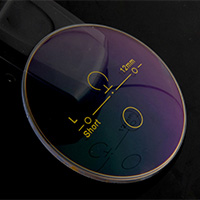
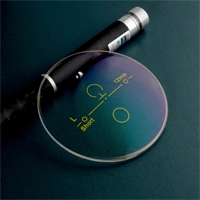
For example, Crystal Optical provides blue-light-blocking photochromic progressive lens solutions with specifications including:
These specifications represent product design parameters rather than universal performance standards for all lenses.
The combination of technologies allows optical businesses to develop products for users who need both environmental adaptability and wavelength management. This approach is especially relevant as modern lens requirements continue to expand beyond simple vision correction.
Conclusion: Choose the Lens Technology Around the Light Environment
The choice between photochromic vs blue cut lenses depends on the type of light challenge being addressed. Photochromic lenses are designed for automatic adaptation to changing light conditions, while blue cut lenses focus on filtering selected blue-light wavelengths. Neither technology replaces the other because their functions are fundamentally different.
Crystal Optical provides both photochromic and blue block lens solutions, including options that combine these technologies in prescription and progressive lens designs. By understanding the difference between photochromic and blue cut lens technology, optical businesses can better match lens features with different indoor, outdoor and daily-use requirements.
FAQ
Can blue cut lenses change color outdoors?
No. Blue cut lenses generally maintain their designed appearance and do not automatically darken according to UV exposure like photochromic lenses.
Do photochromic lenses work behind a car windshield?
Performance may vary because many vehicle windshields block a significant amount of UV radiation, which can affect photochromic activation.
Can a photochromic lens also block blue light?
Yes. Some lens designs combine photochromic functions with blue-light-filtering technology.
Are blue cut lenses always yellow?
Not necessarily. Lens appearance depends on the filtering method, coating design and material structure.
Which lens is more suitable for people who frequently move between indoors and outdoors?
Photochromic lenses are generally designed for users who need automatic adjustment between different lighting environments.
Can progressive lenses have both photochromic and blue-light-filtering functions?
Yes. Some progressive lens designs can combine both technologies to provide multiple optical functions in one lens.

 English
  日本語
日本語  한국어
한국어  français
  Deutsch
  Español
  italiano
  русский
  português
  日本語
日本語