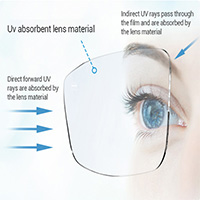
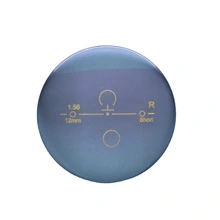
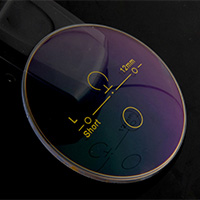
As myopia management develops, lens design is moving beyond simple vision correction. Traditional single vision lenses mainly focus on providing clear central vision, while modern optical solutions explore how controlled light distribution across the retina may influence visual signals. Defocus lenses represent this new approach by combining clear central correction with specially designed peripheral optical effects.
The key idea behind defocus lenses is not simply adding power to a lens, but controlling where different parts of incoming light are focused. Through optical structures such as peripheral defocus zones or multiple lens elements, these lenses aim to create a specific visual environment while maintaining functional distance vision.
Crystal Optical currently offers several myopia management lens designs, including Peripheral Defocus Kids Myopia Control Single Vision Lens, Multi-zone Defocus Kids Myopia Control Lens and Hi-Max Bifocal Kids Myopia Control Lens. These products reflect different approaches to integrating optical design with children’s visual needs.
What Are Defocus Lenses?
Defocus lenses are spectacle lenses designed to provide clear central vision while introducing controlled optical defocus in selected areas of the lens. Unlike conventional single vision lenses that mainly provide one uniform correction, defocus designs create additional optical effects outside the main viewing area.
The basic optical concept can be understood as:
Central correction → clear vision
Peripheral optical design → controlled defocus effect
The reason this design attracts attention in myopia management is related to the relationship between retinal image quality and eye growth. Research into peripheral defocus suggests that different retinal areas may receive different focus signals, and optical designs that introduce myopic defocus in the peripheral retina have become an important area of investigation.
Crystal Optical’s multi-zone defocus lens design uses a central correction area combined with peripheral optical elements to create this type of optical distribution. The goal is not to replace clear vision correction, but to create a more complex optical environment compared with traditional lenses.

How Peripheral Defocus Is Used in Myopia Management
The core principle behind many defocus lenses is peripheral defocus. To understand this concept, it is useful to separate central vision from peripheral vision.
The central retina is responsible for detailed vision, such as reading and recognizing objects. The peripheral retina covers a wider visual field and also receives information from the surrounding environment.
Traditional single vision lenses are designed mainly to correct central refractive error. However, optical researchers have explored whether peripheral retinal focus patterns may be associated with myopia development. Based on this theory, some lens designs introduce controlled myopic defocus signals in peripheral areas while maintaining clear central vision.
The optical process can be described as:
Central area provides the required prescription correction.
Peripheral areas introduce additional optical defocus.
The retina receives different focus signals across different regions.
It is important to note that defocus lens technology is an area of ongoing research. Current evidence suggests that peripheral defocus spectacle designs may influence myopia progression compared with standard single vision lenses, but results depend on lens design, wearing behavior and individual factors.
Single-Zone vs Multi-Zone Defocus Lens Designs
Different defocus lenses use different optical strategies. The main difference is how the additional optical effect is distributed across the lens.
| Design | Optical Concept | Main Feature |
|---|
| Conventional Single Vision | One primary prescription area | Provides clear central correction |
| Peripheral Defocus | Peripheral power distribution changes | Creates controlled peripheral optical effects |
| Multi-Zone Defocus | Central correction combined with multiple peripheral elements | Provides clear vision with multiple defocus zones |
Peripheral defocus designs usually focus on creating a controlled power difference between the center and surrounding areas. Multi-zone designs take this concept further by arranging multiple optical elements around the central zone.
Crystal Optical’s Peripheral Defocus and Multi-zone Defocus products represent different design approaches within myopia management lenses. The choice between different designs depends on optical requirements, prescription range and intended application.
Why Lens Geometry Matters in Defocus Lenses
The performance of a defocus lens depends not only on the optical principle but also on detailed lens geometry. A myopia management lens is a carefully engineered optical system where parameters such as diameter, curvature and peripheral power distribution influence the final visual experience.
For example, Crystal Optical’s Peripheral Defocus Kids Myopia Control Single Vision Lens is available in 1.56 and 1.60 index options, with a 75 mm diameter, SPH range up to -8.00 and CYL range up to -4.00 according to product specifications.
Its Multi-zone Defocus Kids Myopia Control Lens also provides 1.56 and 1.60 index options, with 72/75 mm diameter choices, SPH up to -8.00 and CYL up to -4.00.
These specifications demonstrate that defocus lens development involves more than adding a special optical zone. Factors such as lens size, prescription range and surface design must work together to support practical wearing performance.
What Does Clinical Evidence Say About Defocus Spectacle Lenses?
The development of defocus lenses is supported by growing research into peripheral defocus optical designs. One important example is the Defocus Incorporated Multiple Segments (DIMS) lens study, which investigated children wearing specially designed lenses compared with children wearing single vision lenses.
A two-year randomized clinical trial involving children aged 8–13 reported that the DIMS lens group showed slower myopia progression compared with the single vision lens group. The study reported progression of approximately -0.41 D in the DIMS group compared with -0.85 D in the single vision group, with axial length changes of 0.21 mm versus 0.55 mm respectively.
A later systematic review and meta-analysis also evaluated peripheral defocus spectacle lenses and found that these designs showed differences in spherical equivalent refraction and axial length outcomes compared with single vision lenses across multiple studies.
However, lens performance depends on many factors, including optical design, wearing time, fitting accuracy and individual visual characteristics.
Defocus Lens Design, Wearing Experience and Real-World Use
Optical performance is only one part of a successful myopia management solution. A child’s actual wearing experience can influence whether a lens performs as intended.
Important practical factors include:
A well-designed defocus lens must balance optical function with everyday usability. If a child does not consistently wear the lens, the potential benefit of the optical design may be reduced.
This is why modern myopia management lenses focus not only on optical theory but also on lightweight materials, appropriate lens geometry and comfortable wearing conditions.
Conclusion: Defocus Lens Performance Starts with Optical Design
Defocus lenses demonstrate how modern optical engineering is expanding from simple correction toward more advanced visual management solutions. Their effectiveness depends on the relationship between optical design, peripheral defocus distribution, lens geometry and real-world wearing conditions.
Crystal Optical develops peripheral defocus and multi-zone defocus lens solutions with different materials, powers, diameters and coating options for optical businesses developing myopia management portfolios. By understanding how defocus technology works, professionals can better evaluate lens designs for different applications.
FAQ
Can defocus lenses be used with high prescriptions?
Yes. Some defocus lens designs are available in extended prescription ranges, but the suitable option depends on the specific product design and prescription requirements.
How long does it usually take children to adapt to defocus lenses?
Adaptation time varies between individuals. Factors such as previous lens experience, lens design and wearing habits can influence the adjustment period.
Can defocus lens designs be combined with different coatings?
Yes. Depending on the lens material and product structure, defocus lenses can be combined with coatings such as hard coating, anti-reflective coating and other surface treatments.
Do all defocus lenses use the same optical principle?
No. Different defocus lenses may use different approaches, including peripheral power distribution, multi-zone elements or other optical structures.
Can defocus lenses be produced in different lens indexes?
Yes. Different index materials can be selected according to prescription strength, thickness requirements and product specifications.
Why is regular follow-up still important when using myopia management lenses?
Regular follow-up helps monitor vision changes and allows eye care professionals to evaluate whether the selected lens solution continues to match the user’s needs.

 English
  日本語
日本語  한국어
한국어  français
  Deutsch
  Español
  italiano
  русский
  português
  日本語
日本語